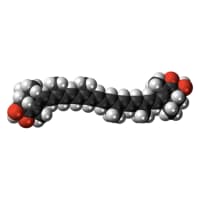
Astaxanthin is a keto-carotenoid. It belongs to a larger class of chemical compounds known as terpenes built from five carbon precursors, isopentenyl diphosphate, and dimethylallyl diphosphate.
Healing Properties
Antiaging
Antioxidant
Astaxanthin is the most powerful natural carotenoid antioxidant.[1]
A 2026 systematic review that searched PubMed, Scopus, and Web of Science for human studies published from January 2020 to July 2025 included 15 studies and excluded in vitro and animal work.[2] Across the included trials, the review reported that astaxanthin supplementation was associated with lower oxidative-stress markers and higher antioxidant capacity measures such as superoxide dismutase and total antioxidant capacity, while noting variation in dose, formulation, population, and outcomes.[2:1]
Brain Antioxidant
Astaxanthin suppresses oxidative stress in the hippocampus and prefrontal cortex.[3]
Antiinflammatory
Astaxanthin decreases oxidative stress and inflammatory response in cells.[1:1]
The same systematic review reported reductions in inflammatory markers such as IL-6 and TNF-alpha in several included human trials, with mixed or context-specific results in cardiometabolic and exercise studies.[2:2]
Neuroinflammation
Astaxanthin could regulate the expression of inflammatory cytokines in the hippocampus and prefrontal cortex.[3:1]
Anticancer
Astaxanthin works together with Human serum albumin (the most abundant protein in blood plasma) to fight cancer at a cellular level.[4]
Anti-Apoptotic (anti-apoptosis)
Antiproliferative
Astaxanthin was shown to prevent cell proliferation, Migration, And drug-resistance in human ovarian carcinoma cells.[4:1]
Astaxanthin induced apoptosis in carcinoma cells via mitochondrial apoptotic pathways.[4:2]
Cardioprotective
Astaxanthin is beneficial for ischemic-reperfusion of clogged arteries to help restore blood flow.[1:2]
Immunomodulator (Immune Response)
Mental Wellness (mental health)
Astaxanthin supplementation improves global mood state and supports mental wellness in healthy subjects.[5]
Neuroprotection (neuroprotective)
Astaxanthin’s antioxidant properties provide powerful neuroprotection.
- Short-term (7-day) treatment with astaxanthin demonstrated a protective effect on glial and neuronal alterations.[6]
- glia are the connective tissue of the nervous system, they are associated with neurons which are the nerve cells.
Astaxanthin has been shown to prevent hippocampal structural damage, to a certain extent.[3:2]
Renal Health
Astaxanthin can increase peritubular capillary density (peritubular capillaries are tiny blood vessels in the renal system).[7]
- Astaxanthin upregulates vascular endothelial growth factor and downregulates thrombospondin levels.[7:1]
Skin Health
Photoprotective / UV Protection
In human keratinocytes, astaxanthin effectively protected against UV-induced inflammation.[8]
Vision (eyesight)
Patients treated with lutein/zeaxanthin and astaxanthin together with antioxidants nutrients were more likely to report clinically meaningful stabilization/improvements in Visual Acuity, Contrast Sensitivity, and visual function through 24 months compared with non-treated subjects.[9]
Disease / Symptom Treatment
Chemotherapy
Retinal Toxicity
Retinal toxicity refers to toxicity of the retina in the eyes.
The astaxanthin molecule is a promising option to prevent retinal toxicity in patients receiving the antineoplastic (anti-cancer) agent, Cisplatin as treatment for malignant tumors.[10]
- Astaxanthin treatment reduced the increases in MDA, eNOS, and 8-OHdG levels following CIS administration and increased the levels of GSH expressions, as well.[10:1]
Depression
Natural astaxanthin supplementation reduces negative mood state (depression and fatigue) and improves global mood state and thus supports mental wellness in healthy subjects.[5:1]
- Significant improvements were found with Natural astaxanthin treatment for positive mood state.[5:2]
Diabetes
Dyslipidemia
Vision Loss
The carotenoid Astaxanthin can confer a rapid antioxidant protective effect to the retina.[6:1]
- A high-fat diet and obesity coupled with type 2 diabetes can cause a condition called non-proliferative diabetic retinopathy. This is the most common cause of vision loss among people with diabetes.
Short-term treatment with astaxanthin has been shown to prevent glial dysfunction in the diabetic retina.[6:2]
Astaxanthin’s antioxidant and neuroprotective properties can help attenuate the Retinal Changes caused by diabetic retinopathy.[6:3]
- Diabetic retinopathy affects blood vessels in the light-sensitive tissue that lines the back of the eye (the retina). The blood vessels swell and develop balloon-like micro-aneurysms that leak fluid into the retina.
Fatigue
Astaxanthin reduces depression and fatigue in healthy subjects
Natural astaxanthin (NAX) supplementation reduces negative mood state parameters (depression and fatigue) and improves global mood state and thus supports mental wellness. A total of 28 healthy subjects, half male and half female, with a median age of 42, supplemented with 12 mg per day of NAX or placebo. After an 8-week supplementation period, significant improvements were found in global mood state and related subscales: Vigor, Tension, Depression, Anger, Fatigue, and Confusion.
Source: https://doi.org/10.31989/ffhd.v9i8.636
Heart Disease
Heart Attack
Hypertension
Vascular Dementia
Astaxanthin could alleviate the morphological impairment caused by Vascular Demetia.[3:3]
- After Astaxanthin treatment, the damage of neurons was alleviated, showing remarkable improvement, with orderly arrangement of cells and large and clear nucleus.[3:4]
Cognitive Impairment
Astaxanthin could improve non-spatial cognitive function.[3:5]
Spatial Cognition Impairment
Astaxanthin might ameliorate impairment of spatial acquired function to a certain extent.[3:6]
Renal Interstitial Fibrosis
Anti-Fibrotic: Astaxanthin has been shown to attenuate renal interstitial fibrosis and peritubular capillary rarefaction via inactivation of the TGF‑β1/Smad signaling pathway.[7:2]
Nicotine-induced Toxicity
Astaxanthin protects the organs against the toxic effects of nicotine.[1:3]
- Nicotine can cause harmful effects on the male testes potentially impacting fertility. Astaxanthin demonstrated a protective effect on these organs.[1:4]
- Astaxanthin reversed the negative effects of nicotine.[1:5]
Vision Loss
Age Related Macular Degeneration
- Astaxanthin can be used as a supplementary medication for dry type-age related macular degeneration patients.[10:2]
Title: Histopathological Analysis of Testis: Effects of Astaxanthin Treatment against Nicotine Toxicity
Publication: Arak University of Medical Sciences
Date: Feb 2019
Study Type: Animal Study
Author(s): Bashir Sobhani, Sahar Roomiani, Zahra Ahmadi, Milad Ashrafizadeh
Institution(s): Ferdowsi University of Mashhad: Mashhad, Razavi Khorasan; Tabriz University: Tabriz, East Azerbaijan;
Copy: archive, archive-mirror ↩︎ ↩︎ ↩︎ ↩︎ ↩︎ ↩︎Title: The Role of Astaxanthin as an Antioxidant and Anti-Inflammatory Agent in Human Health: A Systematic Review
Publication: International Journal of Molecular Sciences
Date: January 9, 2026
Study Type: Systematic Review
Author(s): Giuseppina Malcangi, Angelo Michele Inchingolo, Lucia Casamassima, Irma Trilli, Laura Ferrante, Marialuisa Longo, Francesco Inchingolo, Grazia Marinelli, Andrea Palermo, Gianna Dipalma, Alessio Danilo Inchingolo
Institutions: Interdisciplinary Department of Medicine, University of Bari “Aldo Moro”, Bari, Italy; Department of Biomedical, Surgical and Dental Sciences, Milan University, Milan, Italy; Department of Experimental Medicine, University of Salento, Lecce, Italy
Link: Source ↩︎ ↩︎ ↩︎Title: Astaxanthin protects cognitive function of vascular dementia
Publication: Behavioral and Brain Functions
Date: November 2020
Study Type: Animal Study: In Vitro - In Vivo
Author(s): Ningwei Zhu, Xiao Liang, Ming Zhang, Xiaolan Yin, Hui Yang, Yajun Zhi, Guizhen Ying, Jialing Zou, Lei Chen, Xiaokun Yao & Hongwei Li
Institutions: Zhejiang Pharmaceutical College, Yin Zhou District, Ningbo, Zhejiang, China
Copy: archive, archive-mirror ↩︎ ↩︎ ↩︎ ↩︎ ↩︎ ↩︎ ↩︎Title: Astaxanthin Combine With Human Serum Albumin To Abrogate Cell Proliferation, Migration, And Drug-Resistant In Human Ovarian Carcinoma SKOV3 Cells
Publication: Anti-Cancer Agents in Medicinal Chemistry
Date: Feb 2019
Study Type: Human Study: In Vitro
Author(s): Xiu-Zhen Su, Ran Chen, Cai-Bing Wang, Xi-Lin Ouyang, Yan Jiang, Ming-Yi Zhu.
Institution(s): Youjiang Medical University for Nationalities, Baise, China
↩︎ ↩︎ ↩︎Title: Astaxanthin Supplementation Reduces Depression and Fatigue in Healthy Subjects
Publication: EC Nutrition
Date: January 2019
Study Type: Human Study
Author(s): Shawn Talbott, Don Hantla, Bob Capelli, Lixin Ding, Yanmei Li and Christian Artaria
Institution(s): EQQIL, Draper, UT, USA; Treehouse Athletic Club, Draper, UT, USA; Algae Health Sciences, Irvine, CA, USA; BGG North America, Irvine, California, USA; BGG Beijing, China; BGG Europe, Lugano, Switzerland
Copy: archive, archive-mirror ↩︎ ↩︎ ↩︎Title: Short-Term Administration of Astaxanthin Attenuates Retinal Changes in Diet-Induced Diabetic Psammomys obesus
Publication: Current Eye Research
Date: Sept 2018
Study Type: Animal Study
Author(s): Baccouche B, Benlarbi M, Barber AJ, Ben Chaouacha-Chekir R
Institution(s): Université de Carthage (UCAR), Tunis, Tunisie; Penn State College of Medicine, Hershey, PA, USA
Copy: archive, archive-mirror ↩︎ ↩︎ ↩︎ ↩︎Title: Astaxanthin ameliorates renal interstitial fibrosis and peritubular capillary rarefaction in unilateral ureteral obstruction
Publication: Spandidos Publications: Molecular Medicine Reports
Date: February 2019
Study Type: Animal Study
Author(s): Jin Zhao Meixia Meng Jinhua Zhang Lili Li Xiaojing Zhu Li Zhang Chang Wang Ming Gao
Institution(s): Xi’an No. 4 Hospital, Xi’an, Shaanxi, P.R. China
Copy: archive, archive-mirror ↩︎ ↩︎ ↩︎Title:
Publication:
Date:
Study Type: Animal Study, Commentary, Human Study: In Vitro - In Vivo - In Silico, Human: Case Report, Meta Analysis, Review
Author(s):
Institutions:
Copy: archive, archive-mirror ↩︎Title: Carotenoids in Age-related Maculopathy Italian Study (CARMIS): two-year results of a randomized study
Publication: European Journal of Ophthalmology
Date: March 2012
Study Type: Human Study: open-label randomized study
Author(s): Piermarocchi S1, Saviano S, Parisi V, Tedeschi M, Panozzo G, Scarpa G, Boschi G, Lo Giudice G; Carmis Study Group.
Institution(s): University of Padova, Padova, Italy.
Copy: archive, archive-mirror ↩︎Title: The protective effects of astaxanthin against cisplatin-induced retinal toxicity
Publication: Cutaneous and Ocular Toxicology
Date: January 2019
Study Type: Animal Study
Author(s): Hüseyin Fındık, Levent Tumkaya, Adnan Yılmaz, Mehmet Gökhan Aslan, Murat Okutucu, Kerimali Akyildiz, Tolga Mercantepe
Institution(s): Recep Tayyip Erdogan University, Rize, Turkey
Copy: archive, archive-mirror ↩︎ ↩︎ ↩︎