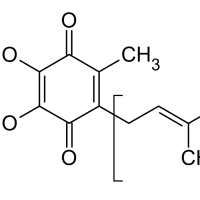
Coenzyme-Q10
Healing Properties
Anticancer
The anticancer effects of coenzyme Q10 were stronger with the addition of β-glucan. There is significant synergy between coenzyme Q10 and β-glucan.[1]
Antiinflammatory
Strong Antiinflammatory effects.[1:1]
- Ubiquinone-10 (also known as coenzyme Q10 or CoQ10) is a lipid-soluble benzoquinone with a side chain containing 10 isoprenyl units. It exists in its reduced form (ubiquinol), which functions as an antioxidant.[2]
- It is a crucial part of the electron transport chain within the adenosine triphosphate (ATP) synthesis machinery and provides effective defence against the oxidation of lipid membranes, proteins, and nucleic acids.[2:1]
- Ubiquinone activates Peroxisome proliferator-activated receptor (PPAR)-mediated anti-inflammatory responses and helps scavenge free radicals while suppressing inflammatory signalling pathways.[2:2]
- In a small randomized, blind, placebo-controlled clinical trial of men with occupational lead exposure, 200 mg/day ubiquinone for two months was associated with lower Tumor Necrosis Factor alpha (TNF-α) and Interleukin-6 (IL-6) levels, while C-reactive protein (CRP) did not significantly change.[2:3]
Antioxidant
Skin Health
- Coenzyme Q10 protects against oxidative stress-induced cell death and enhances the synthesis of basement membrane components in dermal and epidermal cells.[3]
Photoprotective
- Topical application of CoQ10 has the beneficial effect of preventing photoaging.[3:1]
UV Protection
- CoQ10 was shown to reduce UVA-induced MMPs in cultured human dermal fibroblasts.[3:2]
- MMPs (Matrix Metalloproteinases) are enzymes activated by UV exposure or inflammation. MMPs contribute to the breakdown of collagen while inhibiting new collagen formation.[4]
Heart Health
Disease / Symptom Treatment
Cancer
Heart Disease
Title: Combination Therapy with Glucan and Coenzyme Q10 in Murine Experimental Autoimmune Disease and Cancer
Publication: International Journal of Cancer Research and Treatment
Date: June 2018
Study Type: Animal Study: In Vivo, Human Study: In Vitro
Author(s): VACLAV VETVICKA and JANA VETVICKOVA
Institution(s): University of Louisville, KY, U.S.A.
Copy: archive, archive-mirror ↩︎ ↩︎Title: Ubiquinone Supplementation Lessens the Negative Impacts of Occupational Lead Exposure by Reducing Inflammation
Publication: Malta Medical Journal
Date: July 25, 2025
Study Type: Human Study: Randomized, blind, placebo-controlled clinical trial
Author(s): Noralhuda A Yahya, Doaa K Ibrahim, Zeina A Al-Thanoon
Institution(s): University of Mosul
Copy: archive, archive-mirror ↩︎ ↩︎ ↩︎ ↩︎Title: An extensive Review of Sunscreen and Suntan Preparations
Publication: ARC Journal of Pharmaceutical Sciences (AJPS)
Date: April 2019
Study Type: Review
Author(s): AK Mohiuddin
Institution(s): World University of Bangladesh
Copy: archive, archive-mirror ↩︎ ↩︎ ↩︎