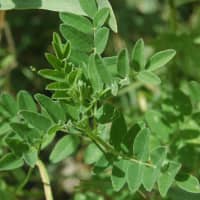
Astragalus propinquus is a flowering plant. It is a fundamental herb used in traditional Chinese medicine. Astragalus, either alone or in combination with other herbs, may benefit the immune system, heart, and liver, and be useful as treatment for cancer when added to conventional methods.[1]
Healing Properties
Anticancer
Astragalus Polysaccharides (APS), a natural extract from Astragalus membranaceus (Huang Qi), enhances the efficacy of radiotherapy and chemotherapy while reducing treatment-related toxicity.[2]
- APS combined with chemoradiotherapy improved objective response rate (ORR) and disease control rate (DCR) in cervical cancer patients.[2:1]
- APS modulates immune function, increasing CD3+, CD4+ T lymphocyte ratios and the CD4+/CD8+ ratio.[2:2]
- APS reduced tumor markers including CEA, SCC, and CA125.[2:3]
Anti-Fibrotic
Astragaloside IV (AS-IV), a natural compound from Astragalus mongholicus, significantly ameliorates pulmonary fibrosis through multiple mechanisms.[3]
- AS-IV reduces key indicators of pulmonary fibrosis including fibrosis score, pulmonary inflammation scores, hydroxyproline content, and lung index.[3:1]
- AS-IV inhibits epithelial-mesenchymal transition (EMT) and extracellular matrix (ECM) remodeling.[3:2]
- AS-IV reduces inflammatory markers and oxidative stress indicators.[3:3]
Wound Healing
Astragalus mongholicus Bunge significantly promotes wound healing in preclinical models.[4]
- Wounds treated with Astragalus mongholicus Bunge had a significantly higher wound contraction percentage compared to control groups.[4:1]
- Astragalus treatment enhances angiogenesis (new blood vessel formation) and facilitates collagen deposition.[4:2]
- Astragalus diminishes pro-inflammatory factors at the wound site.[4:3]
- No harmful events were reported in the reviewed studies.[4:4]
Disease / Symptom Treatment
Breast Cancer
Suppresses Breast Cancer Growth.
Cervical Cancer
Astragalus Polysaccharide Injection (APS) combined with chemoradiotherapy improves outcomes for cervical cancer patients compared to chemoradiotherapy alone.[2:4]
- Improved objective response rate (RR = 1.43, 95% CI: 1.24–1.64) and disease control rate (RR = 1.16, 95% CI: 1.08–1.24).[2:5]
- Improved Karnofsky Performance Status (KPS) scores.[2:6]
- Enhanced immune function with increased T lymphocyte activity.[2:7]
Pulmonary Fibrosis
Astragaloside IV (a saponin compound from Astragalus) consistently ameliorates pulmonary fibrosis in preclinical models.[3:4]
- A meta-analysis of 23 in vivo animal studies (518 animals) found AS-IV significantly reduced pulmonary fibrosis scores and inflammation.[3:5]
- AS-IV is a promising multi-target therapeutic agent for pulmonary fibrosis.[3:6]
Title: Astragalus: Benefits, Side Effects, Dosage, and Interactions
Publication: Verywell Health
Date: 2021 ↩︎Title: Astragalus polysaccharides combined with radiochemotherapy for cervical cancer: a systematic review and meta-analysis of randomized controlled studies
Publication: Frontiers in Pharmacology
Date: 2025/11/11
Study Type: Systematic Review and Meta-Analysis (9 RCTs, 776 patients)
Author(s): Sun, Tao, Zhao, Ruping, Zhang, Yaling, Li, Dongdong, Shan, Xishen, Tang, Xiaoyu, Zheng, Yuling ↩︎ ↩︎ ↩︎ ↩︎ ↩︎ ↩︎ ↩︎ ↩︎Title: Therapeutic effects and potential mechanisms of astragaloside IV on pulmonary fibrosis: a systematic review and meta-analysis of preclinical studies
Publication: Frontiers in Pharmacology
Date: 2025/07/31
Study Type: Systematic Review and Meta-Analysis (23 preclinical studies, 518 animals)
Author(s): Zhang, Shujuan, Xue, Yan, Zhang, Xing, Chen, Feng, Li, Yalan, Zhang, Wei ↩︎ ↩︎ ↩︎ ↩︎ ↩︎ ↩︎ ↩︎Title: Does Astragalus mongholicus Bunge help promote the healing of wounds? a systematic review and meta-analysis of preclinical animal studies
Publication: Frontiers in Pharmacology
Date: 2026
Study Type: Systematic Review and Meta-Analysis (21 preclinical animal studies, 559 animals)
Author(s): Zhang, Jun, Zhang, Feifei, Wang, Ruidan, Yang, Donghua, Wang, Bo, Zeng, Zhaoyang, Tian, Jinhui ↩︎ ↩︎ ↩︎ ↩︎ ↩︎